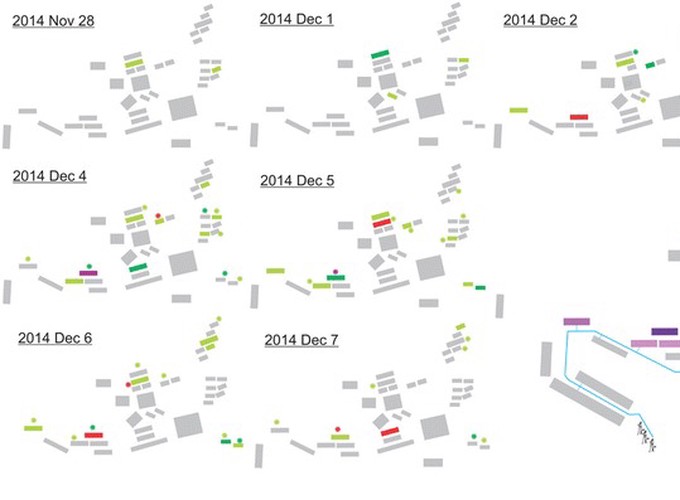
BACKGROUND: In resource-limited settings where laboratory capacity is limited and response strategy is non-specific, delayed or inappropriate intervention against outbreaks of Norovirus (NoV) are common. Here we report interventions of two norovirus outbreaks, which highlight the importance of evidence-based modeling and assessment to identify infection sources and formulate effective response strategies. METHODS: Spatiotemporal scanning, mathematical and random walk modeling predicted the modes of transmission in the two incidents, which were supported by laboratory results and intervention outcomes. RESULTS: Simulation results indicated that contaminated water was 14 to 500 fold more infectious than infected individuals. Asymptomatic individuals were not effective transmitters. School closure for up to a week still could not contain the outbreak unless the duration was extended to 10 or more days. The total attack rates (TARs) for waterborne NoV outbreaks reported in China (n = 3, median = 4.37) were significantly (p < 0.05) lower than worldwide (n = 14, median = 41.34). The low TARs are likely due to the high number of the affected population. CONCLUSIONS: We found that school closure alone could not contain Norovirus outbreaks. Overlooked personal hygiene may serve as a hotbed for infectious disease transmission. Our results reveal that evidence-based investigations can facilitate timely interventions of Norovirus transmission.